From the Field Notes
Paul Clark writes in depth about rum — the craft, the category, and what Fiji has to say about it.
The history, craft, and soul of Fijian rum-making
Rum has been a part of Fiji for much longer than its commercial production.
The first traders used it as a commodity to buy sandalwood and beche de mare. Sly grog was part of the early settlers culture and indeed in 1872 The Fiji Times mentions a trader by the name of John Hill who was fined for illegally distilling "bush rum" near Suva. Levuka, the old capital, was notorious for its riotous pubs and grog houses fueled by local hooch and imported rum.
The Fiji rums we produce today are a far cry from the hooch distilled in the 19th century. With the rise of sugar cane production there was naturally a thriving but small local industry of "bush rum". It is surprising given the huge sugar cane industry that the first commercial rum distillery was not established until 1979 by the Fiji Sugar Corporation which continues to this day.
Although there have been a number of white label rums marketed over the years all these rums have been the product of the Lautoka distillery and remarketed under different brands. The Distillery Co Fiji is only the second commercial distillery in Fiji to produce rum.
Our Fiji rums are made by hand in our distillery in Pacific Harbour. Rum is a simple yet complex process — every step can influence the end result and having a clear picture of what your rum needs to be is paramount in the multiple steps to creating a world class rum.
The first step in rum production is fermentation, the conversion of carbohydrates to alcohol. Our base is the deep, dark molasses which is the by-product of sugar production.
Fermentation and the end product is deeply influenced by the type of yeast that is used, the pH of the wash and the temperature that the ferments sit at. Our ferments vary depending on what rum we are making — as a general rule the more acidic ferments will give you a more complex end product, and the less acidic a cleaner less nuanced product.
Density is a key tool in distillation. It not only gives us an end result on ABV but allows us to calculate when a ferment is finished and how much alcohol has been produced. Once our ferment has gone dry the yeast is siphoned from the bottom cone of the fermenter and the wash is sent to the stills.
What makes our fermentation environment unique is the Pacific itself. The wild yeast populations at Pacific Harbour have never been fully catalogued — the heat, humidity, and microflora of this specific place shape every ferment we run in ways that cannot be replicated anywhere else. This is the foundation of terroir in rum, and it is something we are actively exploring as we develop the next generation of KaloKalo. Read more about the Fiji fermentation question →
At its heart distillation is just about separation and when making rum the method of separation again deeply influences the end product.
Classically rum was a very strong, very lightly separated badly distilled spirit. One of the earliest references comes from Richard Ligon's A True & Exact History of the Island of Barbados (1657), where he describes the crude rum (then called "kill-devil") as: "The drink of the Island... is called Kill-Devil; and this is of a hot, hellish, and terrible quality."
In our distillery we have three stills and 5 columns which allows us to have very precise control of the Fiji rum we are producing. We distill each style of Fiji rum differently to create the expressions we want.
After the spirit exits the still it is proofed to the appropriate ABV and our white rum is then rested for a period before being bottled. We do not barrel the white rum as our fermentation and distillation techniques create a clean crisp rum but still with hints of caramel and cane. Our unique process has been validated where our Fiji rum KaloKalo Pure White Rum has been awarded the highest points of any Fiji white rum in the last 2 years at the London Spirit Awards.
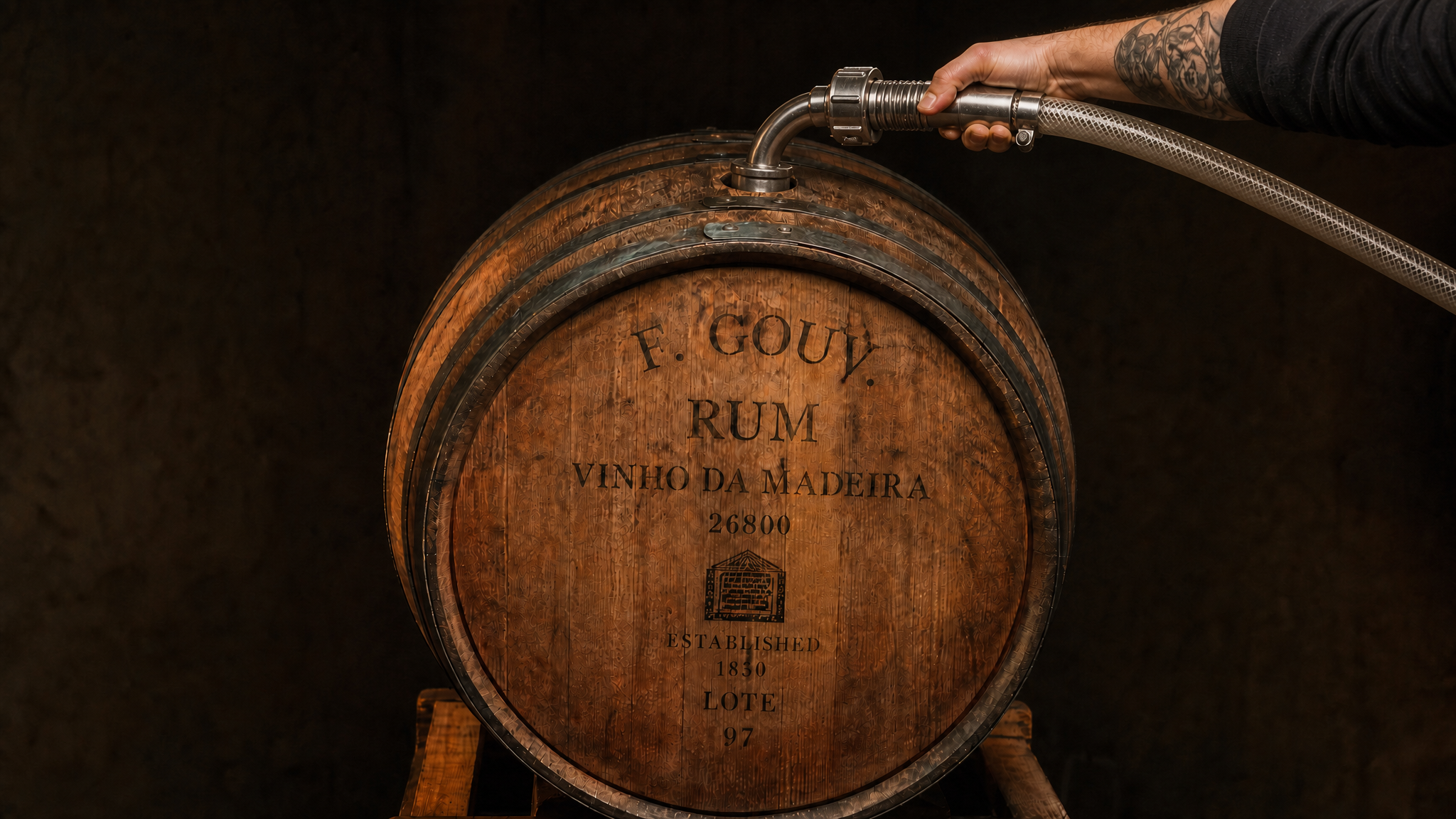
The dark rum is proofed down to 65% ABV and then sent to barrels. It is the interaction of the spirit and the wood that add the colour and complexity to our dark rums.
To create a new Fiji dark rum has been a very exciting journey and it is one you cannot rush. We have tested and tested before finalizing our process and waiting for the rum to mature takes patience. We plan to release another white rum expression shortly and will execute two expressions of the dark rum — a dry light caramel sipping rum, and a heavier bodied molasses forward rum for cocktails. We are very excited for the next chapter of Fiji rum.
One significant consequence of distilling in the Pacific tropics is the angel's share — the rum lost to evaporation through the barrel stave. In Scotland this is typically 2–3% per year. At Pacific Harbour the combination of heat and humidity can drive that figure to 5–7% per year, concentrating the spirit more quickly. A Fijian dark rum aged for five years may carry more genuine barrel interaction than a ten-year rum aged in a cooler climate. The Pacific does not wait.
What's actually happening inside a rum barrel → · Does the barrel improve the rum — or replace it? →
Paul Clark writes in depth about rum — the craft, the category, and what Fiji has to say about it.
The Distillery Co Fiji produces KaloKalo Pure White Rum and KaloKalo Coconut Rum, both fermented and distilled from Fijian sugarcane molasses at our distillery in Pacific Harbour. The Fiji Sugar Corporation's Lautoka distillery has also produced rum commercially since 1979.
The Distillery Co Fiji is the only independent craft rum distillery in Fiji. Founded at Pacific Harbour on the Coral Coast, we are only the second commercial rum distillery in Fiji's history. The distillery is led by Paul Clark, who serves as both CEO and Head Distiller.
Fijian rum is made from molasses — the dark, rich by-product of Fiji's sugarcane industry. The sugarcane is grown by Fijian farmers and crushed by the Fiji Sugar Corporation before the molasses is fermented and distilled at Pacific Harbour. This grass-to-glass process keeps the entire production chain within Fiji.
Fiji's tropical Pacific climate, the character of Fijian sugarcane molasses, and the wild yeast environment of the Pacific Harbour distillery all contribute to a rum found nowhere else. The Pacific heat also accelerates barrel maturation — aged Fijian rum develops complexity significantly faster than rums aged in cooler climates.
Rum has been part of Fiji's history since the 19th century, when early settlers produced illegal bush rum from sugarcane — records from The Fiji Times in 1872 mention a trader fined for illegal distilling near Suva. The first commercial rum distillery was established by the Fiji Sugar Corporation in 1979. The Distillery Co Fiji is the second independent commercial distillery to follow.
KaloKalo rum is available at duty-free stores throughout Fiji including Nadi and Suva airports, Prouds duty-free stores, and selected Fijian retailers. It can also be tasted at our Pacific Harbour distillery.
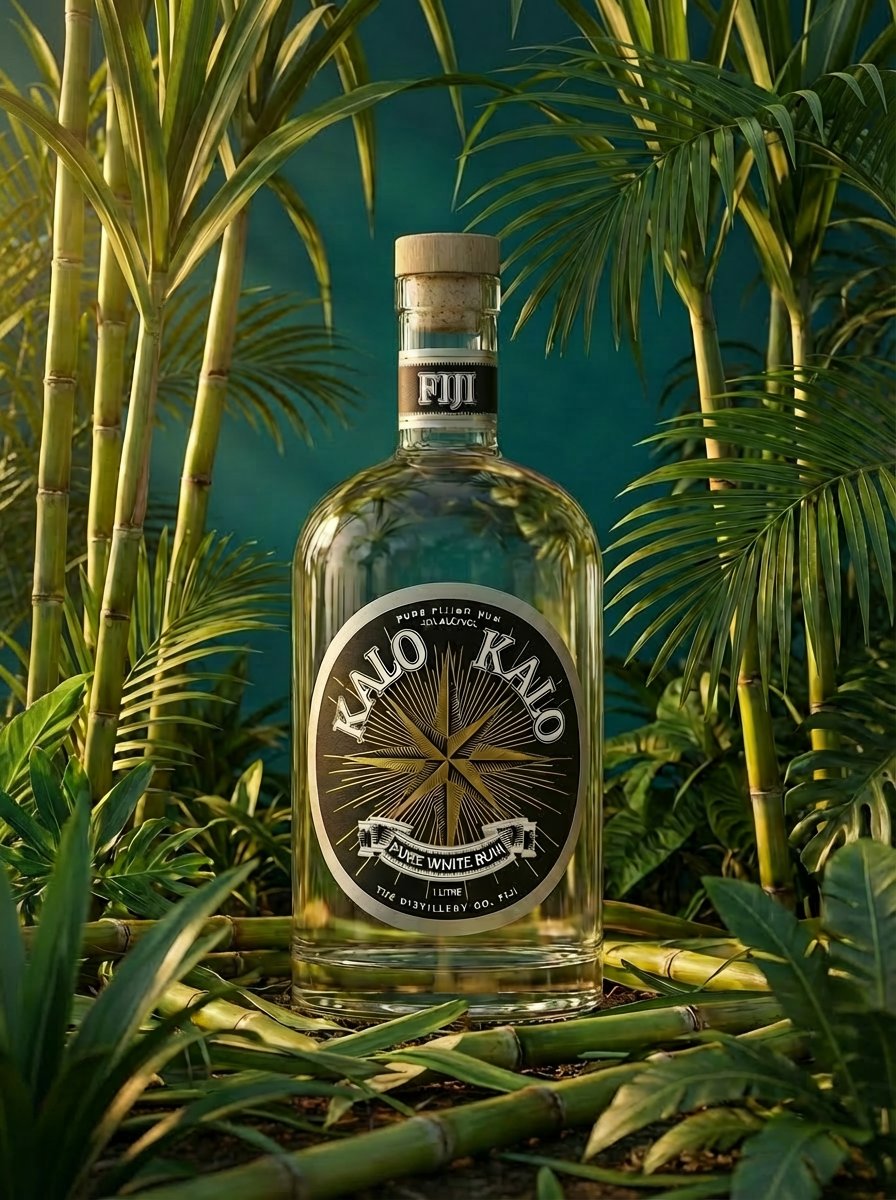
Fiji's smoothest white rum — bold, bright, and award-winning. Distilled from the finest island molasses at 43% ABV.
Award-Winning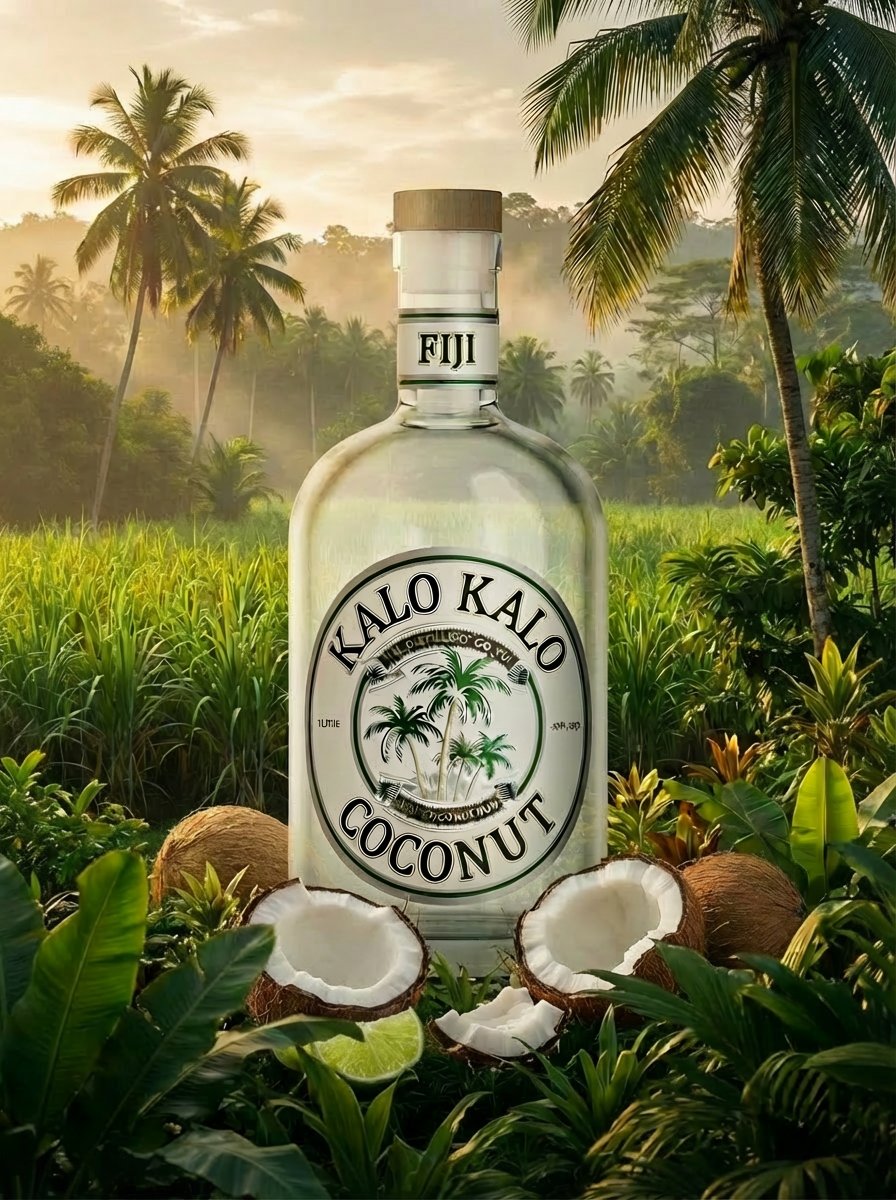
The first full-strength coconut rum ever distilled in Fiji. Rich coconut flavor balanced with premium white rum at 43% ABV.
Fiji's First