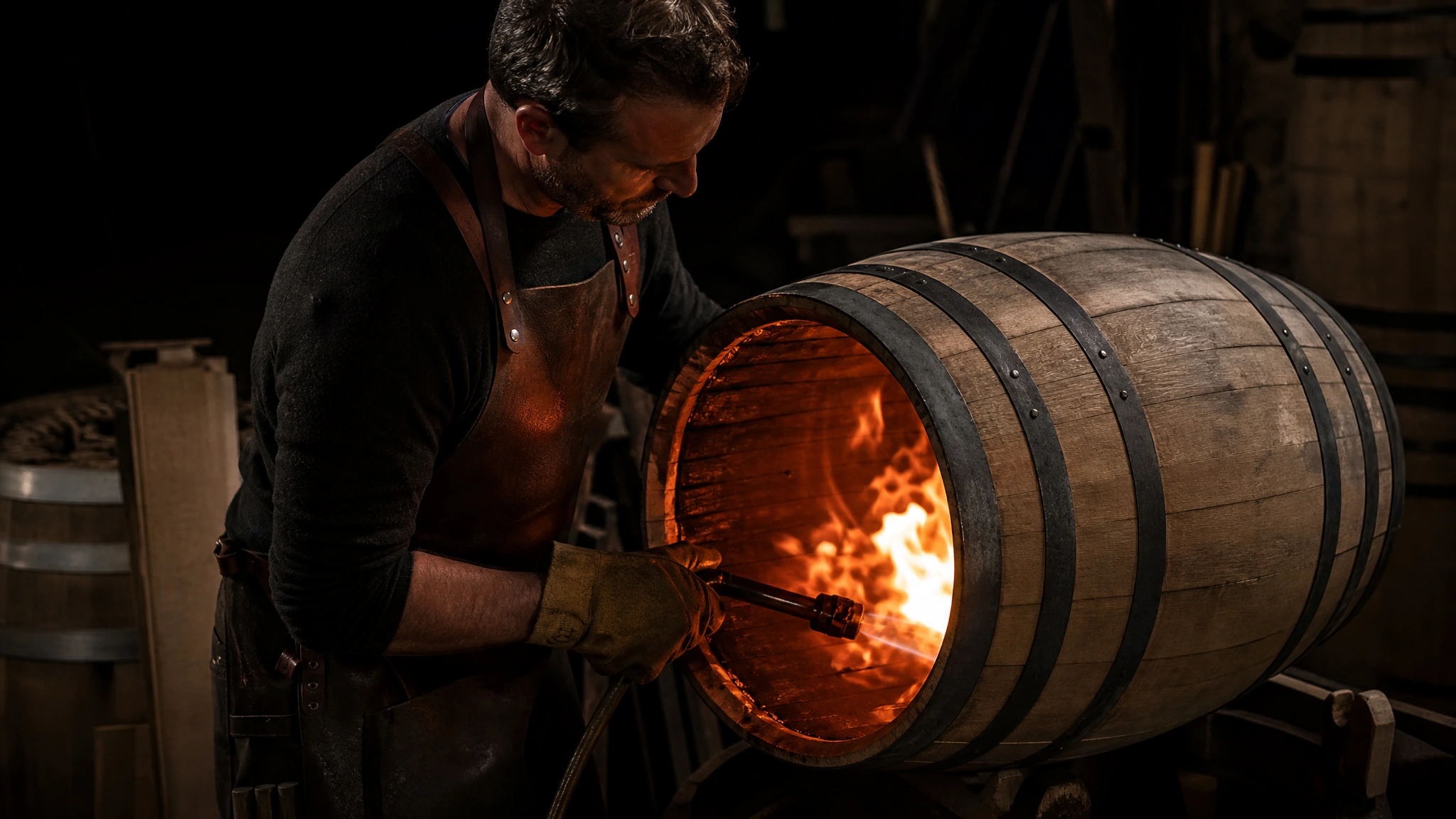
Most people who drink aged rum have a vague sense that the barrel matters. They've heard terms like "ex-bourbon cask" or "finished in sherry." They know that a twelve-year rum tastes different from a three-year rum, and that the wood is involved somehow.
What most people couldn't tell you — including many who work in bars — is what the barrel is actually doing. Not as a marketing story. As chemistry.
That matters, because once you understand the mechanism, you can start to ask better questions about the growing fashion for exotic barrel finishing — and whether it is genuinely improving rum, or simply adding a new story to sell it.
The Barrel Landscape
The overwhelming majority of aged rum in the world is matured in ex-bourbon barrels made from American white oak — Quercus alba. This is not an accident of taste. It is an accident of law.
American bourbon must by law be matured in new, charred oak containers. A barrel can only be used once for bourbon. That creates an enormous supply of once-used barrels that flow out to whisky, rum, tequila, and other spirits producers around the world every year. Ex-bourbon barrels are plentiful, affordable, and — as it turns out — well suited to rum.
Beyond ex-bourbon, a wide and growing range of other casks are now used in rum production, particularly as finishing vessels — meaning the rum completes its primary maturation in one barrel, then spends additional time in a second to pick up a different layer of character:
- Ex-Scotch whisky barrels — used many times over, so they contribute subtly rather than assertively
- Ex-sherry casks (Oloroso, Pedro Ximénez) — add dried fruit, raisin, and dark fruit notes
- Ex-cognac and brandy casks — French oak, a different tannin structure, spicier
- Ex-port casks — red fruit, plum
- Ex-wine casks (Chardonnay, Bordeaux, Sauternes) — increasingly fashionable
- New American oak — aggressive, higher tannin
- STR casks (Shave, Toast, Re-char) — old wine barrels rejuvenated by shaving back to new wood, re-toasting, and re-charring
The list keeps growing. At any major rum festival today you will encounter bottles finished in everything from Japanese mizunara oak to Islay whisky casks to obscure French wine barrels. The exotic barrel has become one of the primary marketing levers in the premium rum market.
What the Barrel Actually Does
Whatever the cask type, the barrel is doing three things to the rum inside it.
Extraction. The spirit draws compounds out of the wood. The most important are vanillin — the source of vanilla character — oak lactones, which produce coconut, tropical fruit, and creaminess, tannins, which add structure and grip, and the breakdown products of hemicellulose, which give caramel and butterscotch sweetness. The char layer on a bourbon barrel — burned to what distillers call a Level 3 char — also acts as a slow carbon filter, softening the spirit and binding harsh sulfur compounds from the new-make before they can reach the final product.
Oxidation. Oxygen permeates slowly through the wood stave. This oxidises harsh aldehydes and aggressive esters into rounder, more integrated compounds. It is one of the primary reasons that aged rum tastes less sharp than the white spirit that went into the barrel.
Concentration. Rum evaporates through the stave over time — the angel's share. In Scotland, this is typically around 2 to 3 percent per year. In tropical distilleries — Barbados, Jamaica, Trinidad, Martinique, or Fiji — the combination of heat and humidity can drive that figure to 5 to 7 percent per year, though this is very dependent on how the barrels are stored. This concentrates the remaining liquid, intensifies the flavours already present, and changes the proof.
That last point matters more than most people realise. Tropical maturation is not simply a faster version of continental maturation. The mechanism is the same but the conditions are so different that a five-year Caribbean- or Pacific-aged rum may have had significantly more barrel interaction than a ten-year spirit aged in cooler, more temperate conditions. The barrel works harder. The angel's share is steeper. The rum concentrates more quickly — and the distillery feels every percentage point of it.
What the Barrel Does Not Do
Here is the thing that gets obscured in a lot of barrel conversation: the barrel does not create character that is not already in the spirit.
It softens. It concentrates. It adds wood-derived compounds. It oxidises rough edges. But the fundamental nature of the rum — the esters, the congeners, the fruit, the funk, or the cleanliness — those come from fermentation and distillation. They are in the new-make spirit before it goes anywhere near a barrel.
A rum with no character going in will have smoother, woodier no-character coming out. A rum with genuine distillation character going in will have that character amplified and integrated over time.
This is why, for some of the most respected distillers working today, the exotic barrel conversation can be a distraction from the more important question: what kind of spirit are you putting inside it? And what does it actually taste like before the wood gets involved?
That question is at the centre of a genuine and heated debate about what premium rum is and where it is going. We will get into it in Part 2.