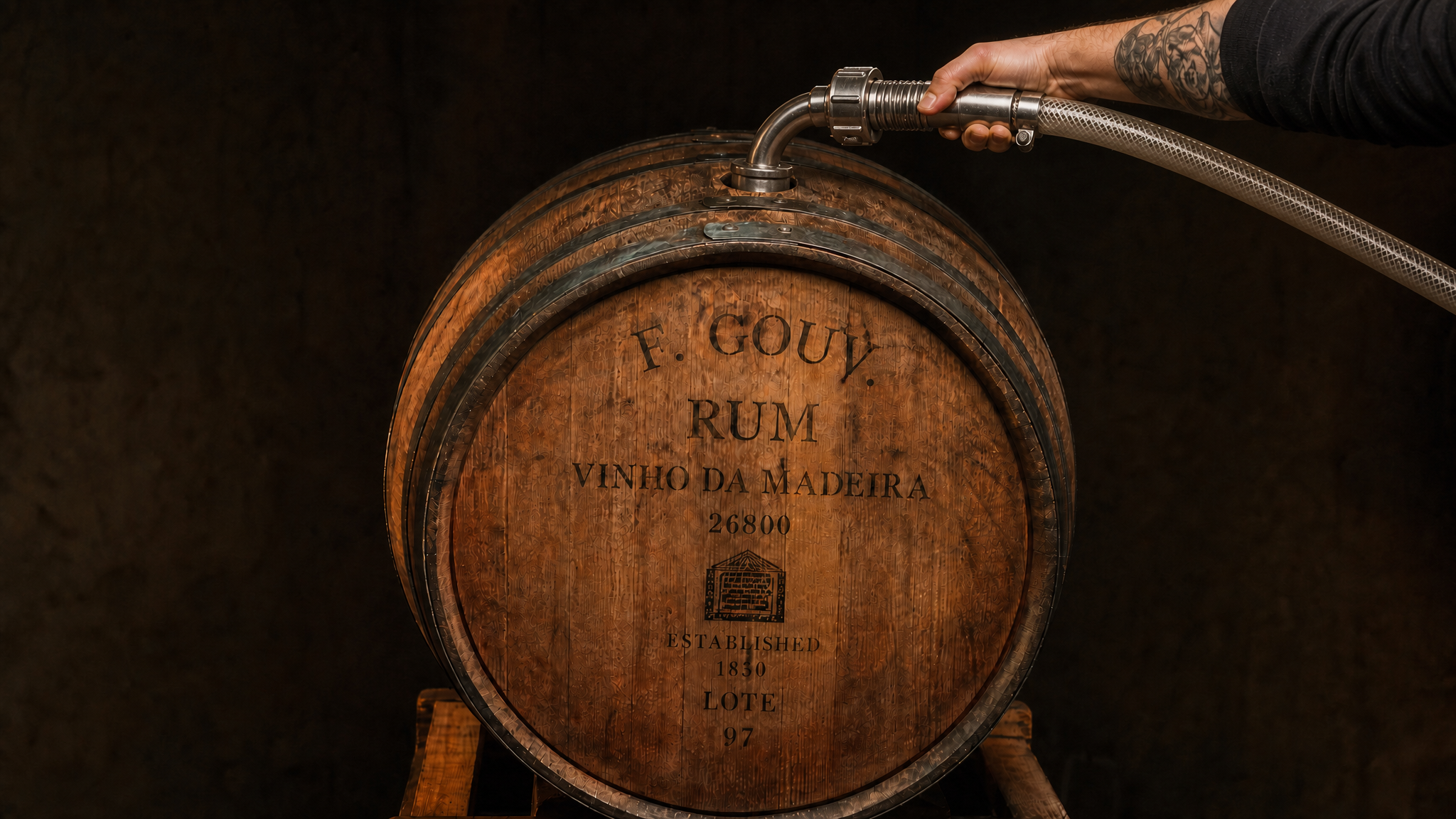
We left Part 1 with a question: are exotic barrels genuinely improving rum, or are they the story that fills the silence when the spirit doesn't have one?
The answer, it turns out, is more complicated than a simple yes or no. But the complication is instructive.
The Most Quoted Man in Rum
If you want the sceptical position stated clearly, you start with Richard Seale.
Seale is the master distiller and proprietor of Foursquare Rum Distillery in Barbados — one of the most respected independent rum producers in the world, and someone who has never been shy about what he thinks the exotic barrel trend represents.
In a 2021 interview with 88 Bamboo, he put his position this way:
"One of the things we do is you won't ever see us doing trivial or gimmicky casks. We only ever focus on casks from recognised denominations of very high quality. Sometimes I hear words being thrown around like 'experimentation.' We do not 'experiment' as I've stressed in that previous interview with you. We use very good casks. As far as we're concerned, we're not doing anything revolutionary. Old-fashioned principle of putting a good rum in a good cask. You won't see any silly barrels from us."
It is a considered, authoritative statement — and that last line carries the real argument. Not "only ex-bourbon." Not "no unusual casks." The principle is simpler and harder: a good rum in a good cask. Which raises the question of what defines a good cask, and what makes a rum worth putting in one.
Because Seale does use non-bourbon casks. His Exceptional Cask Series has included expressions finished in Calvados barrels, Port casks, Black Muscat, and Madeira. Of the Calvados finish he has noted that the wood is "very synergistic with the rum — a rum that is very, very balanced, really beautifully integrated." These are not ex-bourbon. They are, in his own frame, casks from recognised denominations of very high quality.
The distinction Seale is drawing is not about which barrel type you choose. It is about whether the barrel is earning its place — doing something genuine to a spirit that already has character — or whether it is the story you tell when the spirit doesn't have one of its own.
That is a harder argument to print on a label. But it is the right one.
The Decision Nobody Talks About
Luca Gargano runs Velier, the Genoese importer who did more than almost anyone to establish the independent bottler rum market in its current form. He championed Jamaican rum, Caroni, Hampden, and distilleries that were making extraordinary spirits quietly and without fanfare long before the premium category existed.
Gargano's most interesting contribution to the barrel conversation is not about which cask type to use. It is about a decision made long before the barrel appears: what ABV do you fill at?
Historically, rum went into casks at very high strength — 80 to 85% alcohol. The best modern producers have moved toward filling at 55 to 60%. Gargano argues that this is the most consequential decision a distiller makes, because it determines the nature of every subsequent barrel interaction — how quickly compounds are extracted, how oxidation proceeds, how the spirit concentrates over time.
Fill at 80% and you are largely using the barrel as a slow filter. The spirit extracts relatively little from the wood. The process is mostly one of waiting for rough edges to round off. Fill at 60% and the spirit is in genuine, active conversation with the wood from the first day it goes in.
The fill strength will never appear on a bottle label. It will never be a marketing story. But for distillers who care about what the barrel is actually doing to their rum, it is one of the most important invisible decisions in the process — and a reminder that the choices which shape great spirits are often the ones nobody photographs.
One Barrel. Total Commitment.
The clearest illustration of what serious barrel thinking actually looks like — not as a marketing exercise but as a craft philosophy — comes not from rum at all, but from whisky.
The Macallan is built on sherry oak. Not as a finishing flourish or a limited-edition story. As the entire architecture of the spirit.
Their commitment to the sherry cask is so fundamental that they now own 50% of Tevasa Forestal Group: a Spanish cooperage and sawmill operation with facilities in Jerez, Lugo, and Cabezón de la Sal. Their casks are commissioned from scratch and seasoned in Jerez bodegas for up to two years before a drop of whisky touches them. The Macallan and Tevasa have worked together for over 40 years. A fourth Spanish cask supply chain investment was announced in 2024.
This is not sourcing unusual barrels. This is owning half the forest they come from.
And the point that matters most for this conversation: The Macallan is not doing this across a range of exotic barrel types. They went completely, obsessively deep on one cask. Sherry oak, seasoned in Jerez, nothing else. Total control of a single, known, consistent wood. One of the world's great whiskies built its entire identity on understanding exactly what one barrel does — and then invested forty years and four separate supply chain partnerships to control every variable in that barrel's production.
That is not exotic barrel experimentation. It is the opposite: radical discipline around a single cask type. The barrel is not the story. It is the foundation that allows a consistent story to be told at all.
What Unusual Barrels Actually Do
In fairness to the more adventurous end of the market: unusual barrels do add genuine character. That is not in dispute.
A rum finished in Pedro Ximénez sherry casks will take on dried fruit, raisin, and dark sweetness. A Calvados finish introduces apple, pear, and a particular French oak tannin structure. Port adds red fruit and plum. These are real flavour contributions, not invented ones.
How much they add — and how predictably — is harder to quantify. The character of any individual cask varies. The volume of spirit being finished matters. The time in cask matters. Two nominally identical barrels from the same cooperage will behave differently. The distiller working with exotic casks is managing a variable they cannot fully control, on top of the spirit they are already managing.
That is not an argument against exotic barrels. It is an argument for understanding clearly what you are taking on when you choose one — and, more importantly, why.
The Question Underneath the Question
What the barrel debate in rum is really about — beneath the exotic cask catalogues, the festival releases, the limited editions with tasting notes that read like a tour of the Iberian Peninsula — is a more fundamental question about what premium rum is supposed to be.
Is it a spirit that derives its character from great fermentation and distillation, with maturation serving to integrate and refine what is already there? Or is the barrel the primary source of flavour and complexity, with fermentation and distillation providing a neutral canvas for the wood to work on?
Both positions exist in the market. Both produce interesting bottles. And the best producers at either end of the spectrum share one thing: they have thought seriously about where the character in their rum actually comes from, and they can tell you exactly why they made the choices they made.
The question for every distillery working in this space is the same one Seale is really asking: is the barrel doing something real for a spirit that already has something to say? Or has the barrel become the story because the spirit doesn't have one?
What do we put in the barrel at Pacific Harbour, and why? That's Part 3.
Paul Clark is the CEO and Distiller at The Distillery Co Fiji, a craft distillery at Pacific Harbour. TDC Fiji produces Blue Turtle Gin, KaloKalo Rum, VulaViti Pure Vodka, and LoaLoa Coffee Liqueur — all made from Fijian sugarcane.