There is a line that used to appear in the United States Code of Federal Regulations that shaped, for decades, how an entire category of spirits was made, marketed, and consumed around the world. It required that vodka be produced "without distinctive character, aroma, taste, or color."
In April 2020, the US Alcohol and Tobacco Tax and Trade Bureau removed it.
The rule change received limited coverage outside the trade press. But for anyone who makes spirits, or who drinks them seriously, it was a meaningful moment — a regulatory body formally acknowledging what had been plainly true for years. Vodka has always had flavour. The legal fiction that it didn't had done the category no favours.
The Character of Base Ingredients
Ask a serious vodka distiller what their spirit tastes like and they will tell you immediately and specifically. They will talk about the rye notes in their base — the spice, the brazil nut, the creaminess. They will tell you about the water from a particular aquifer, the number of distillations and why. They are not describing a neutral spirit. They are describing provenance.
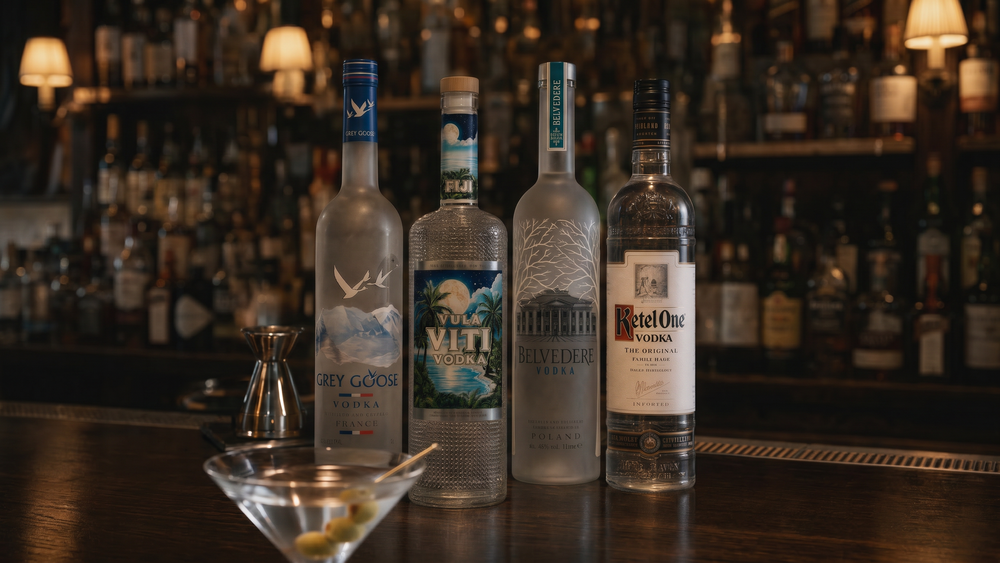
The evidence is on the palate. Belvedere, Poland's benchmark rye vodka, carries a distinct spice and velvety richness that no wheat spirit replicates. Grey Goose, made from soft winter wheat grown in Picardy and distilled in cognac country, has an elegance and silky texture that speaks directly of its ingredients and origin. Chopin, built from rare high-starch Polish potatoes that are rested for two years before distillation, is earthy, creamy, and unlike anything from a cereal base. Cîroc, distilled five times from Mauzac Blanc and Ugni Blanc grapes in France's Gaillac highlands, has a fresh fruitiness that could not be mistaken for grain.
These are not marketing distinctions. They are chemical ones. Each base ferments differently. Each produces a different congener profile. Each requires a different distillation approach. And each, in the hands of a skilled distiller, produces a genuinely different spirit.
The TTB's change was not a revolution. It was an overdue recognition of what the world's great vodka producers had been quietly demonstrating for decades.
A Category Coming of Age
The vodka market has moved through distinct phases in the past thirty years, and understanding where it is now requires knowing where it has been.
The first was the mixer era — vodka as the invisible ingredient, defined entirely by what it didn't taste of. Then came premiumisation. Grey Goose launched in 1997 and changed the conversation overnight: here was a vodka that cost more, arrived with a provenance story, and asked consumers to care about French wheat and French water. They did. The category learned that narrative had value.
The craft revolution followed. Small producers appeared in every market making genuinely interesting spirits from unusual bases, and for the first time mainstream consumers began asking what their vodka was actually made from.
We are now in a fourth phase. Call it maturation. The serious vodka consumer today approaches the category the way a wine drinker approaches a wine list — with genuine curiosity about origin, process, and the specific decisions made by the producer. They are not asking which vodka is smoothest. They are asking which vodka most honestly expresses where it came from.
This shift has produced some of the most interesting vodka being made anywhere in the world. Chase Distillery in Herefordshire built its reputation on exactly this idea — single-estate potatoes, specific fields, specific harvests, a bottle that told you precisely where it came from. It was one of the most compelling provenance stories in British spirits. In 2021 Diageo acquired it, and by January 2025 the original distillery had been closed and production moved to Cameronbridge in Scotland — the same industrial facility that produces Gordon's, Tanqueray, and Pimm's. Only four of the original seventeen staff remained. The single-estate story is now a label on a bottle from a different country. It is worth noting not to diminish what Chase built, but because it illustrates exactly the pressure genuine craft faces when a category matures and large producers want a piece of it.
The more durable terroir stories belong elsewhere. In Japan, Suntory's Haku Vodka is made from 100% Japanese white rice fermented with koji — the same mould culture at the heart of sake production, which converts the rice starches and imparts a character that no grain fermentation produces. Filtered through bamboo charcoal, the result is something no European cereal replicates: a delicate natural sweetness, a softness of texture, and a precision that speaks directly of Japanese ingredient philosophy and centuries of rice spirit tradition. Ukiyo, made on Okinawa from black koji-fermented Indica rice, draws on the even older Awamori tradition. These are not novelty products. They are a genuinely different answer to the question of what vodka can be, rooted in a place and a process with no equivalent anywhere else.
The trajectory of this maturation is not unfamiliar. Gin went through something similar a decade ago. For most of its commercial history gin was categorised loosely — London Dry, or not — and the conversation stopped there. Then the craft movement arrived, and within ten years consumers were discussing botanical provenance, still design, and distillation philosophy with the same vocabulary they brought to whisky. The category grew, it deepened, and it became far more interesting for everyone in it.
Vodka is at that same inflection point. The neutrality myth is gone. The TTB's rule change did not cause this shift — it confirmed one already well underway. The market had decided, and the regulators caught up.
An Uncomfortable Question About the Australian Market
The conversation about provenance and craft is easier to have honestly when you know where the spirit in a bottle actually comes from.
In Australia, tracing that question leads, in many cases, to a single address: Manildra Group's production facility at Nowra, New South Wales. Manildra operates the largest neutral spirit plant in Southeast Asia, processing around one million tonnes of Australian wheat annually. They supply base spirit to domestic and international beverage producers across vodka, gin, blended whisky, and ready-to-drink categories. The company is not secretive about this — they note on their own materials that some of the world's highest-selling vodkas and gins are made using their neutral grain spirit.
Purchasing neutral base spirit is a legal and widespread practice, and Manildra make a high-quality product. But when multiple brands bring the same industrial ethanol to market under different labels, presenting themselves as distinct craft expressions, the question of what differentiates them deserves an honest answer.
There is a related question that rarely gets asked in the Australian market: what exactly is a spirit bottled at 37% ABV? The United States requires a minimum of 40% ABV for vodka. The European Union sets the floor at 37.5%. Australia sits below both. At 37%, a spirit is legally classifiable as vodka under Australian food standards, but it would not qualify as vodka in the world's two most rigorous regulatory frameworks. Given that Australian excise on spirits is calculated directly on alcohol volume, a lower ABV also produces a lower excise liability per bottle. Whether those products are designed primarily as vodka is a reasonable question.
The great vodkas of the world do not occupy themselves with this territory. Belvedere, Ketel One, Grey Goose, Chopin — all at 40%, all transparent about their base, their water, their method. They compete on the strength of what they are, not on what they can technically get away with.
The Hardest Vodka to Make
Which brings us to what is, from a purely technical standpoint, one of the most demanding vodka production challenges in distilling: building a world-class spirit from sugarcane.
Sugarcane fermentation generates a congener load that grain fermentation does not. The chemistry is more complicated and less forgiving. Sulfur compounds — hydrogen sulfide and its relatives — carry off-aromas that are difficult to manage and easy to get wrong. Heavy esters and fusel oils from molasses fermentation sit stubbornly in the distillate. The mineral and protein content of the base material interferes in ways that wheat or potato simply do not.
Stripping all of that, across multiple distillations, and arriving at a spirit that is genuinely clean and neutral — while retaining the subtle, warm softness that a tropical sugarcane origin gives and that no grain in the world can replicate — requires a level of distillation precision that most producers never attempt from this raw material.
The producers who succeed with it have done something worth noting. They have taken one of the most intractable bases in distilling, in one of the world's most demanding climates, and made something that stands alongside the great grain vodkas of Europe not by mimicking them but by being entirely its own thing.
The TTB changed the definition because they had to. The market had already moved. The world's serious vodka producers had been making spirits with genuine character for years, and consumers had been choosing them for exactly that reason.
Vodka always had a flavour. It just took a while for the rules to say so.