In May, Field Notes asked whether white rum had a character problem, and whether the industry had spent a century and a half teaching drinkers to expect nothing from a clear spirit. (Read: White Rum Has a Character Problem.)
That piece ended with a question. This one starts with a bottle.
It has a yellow and green label, it sits at 63% alcohol, and in Jamaica it is close to a national institution. Wray & Nephew White Overproof holds an estimated 85 per cent of the Jamaican overproof market. It is poured at christenings and wakes, splashed on the ground for those who came before and mixed with coconut water at roadside bars from Negril to Port Antonio. It is also, increasingly, the bottle the world’s best bartenders reach for when a drink needs more than alcohol.
So why does the strongest bottle on the shelf so often carry the most flavour? And how much of that flavour really comes from the place on the label?
What “Overproof” Actually Means
Strictly, “overproof” is a hangover from the old British proof system, under which 57.15% ABV was “100 proof”. Anything stronger was over proof. Today the word is used more loosely for any rum bottled well above the standard 37.5 to 40%. The best-known white overproofs cluster at around 63%, with Grenada and St Vincent going further still.
The number matters less than what it implies. Almost every rum comes off the still far stronger than it is bottled. To reach 40%, a distiller adds water, a lot of it. Every litre of water that goes in dilutes everything the distiller worked to keep.
Bottle the same spirit at 63% and a pour carries more than one and a half times the distillate of the same pour cut to 40%. There is also a subtler effect. Some of the heaviest flavour compounds in a white rum are long-chain fatty acid esters: waxy, oily molecules that carry much of its weight, texture and length. Below roughly 46% ABV, and especially when cold, these start to fall out of solution and cloud the spirit. Producers routinely chill-filter to prevent the haze, and the filter takes those compounds with it. At full strength they stay dissolved, and no filter is needed.
Overproof is not a gimmick or a dare. Very often, it is simply a rum that has been interfered with less.
What We Actually Taste
Talk to rum enthusiasts about white overproof for long enough and the conversation turns to esters. Ester counts are printed on labels, quoted in reviews and compared like horsepower. The implication is that a higher number means more flavour. The science tells a different story.
Rum contains more than four hundred volatile compounds, but only a few dozen are present in enough quantity to reach the nose. What matters is not how much of a compound is there, but how much is there relative to the level at which a human can smell it. Flavour chemists call this the odour activity value, and it changes the picture completely.
Start with what an ester count actually is. Traditionally, Jamaican distillers measured esters by reacting them all together and reporting the total as if it were ethyl acetate. Today the figure is often simply the rum’s ethyl acetate level. Either way, it is a single number expressed in terms of one compound, the one that gives nail-varnish remover its smell.
Ethyl acetate is by far the most abundant ester in rum. Gas chromatography studies consistently put it first, usually followed by ethyl lactate. In Jamaica’s most extreme historical style, the “German flavoured” rums shipped to Hamburg and Flensburg for blending, the government chemist H.H. Cousins estimated around 1908 that ethyl acetate made up about 97 per cent of the total esters.
Ethyl acetate matters. It gives a high-ester rum its lift and its sharp, fruity, solvent top note, and in a rum like Hampden’s Rum Fire it is unmistakable. But it is not where the fruit comes from. Its odour threshold is high, and it takes a great deal of it to make an impression. The compounds that carry the pineapple, apple and melon are present at around a thousandth of the concentration, yet they are so potent that they dominate the aroma anyway.
The measurements make the point. In a 2017 University of Illinois study, researchers used gas chromatography–mass spectrometry to measure the key aroma compounds in nine named commercial rums. In Appleton Estate V/X, the pineapple ester, ethyl butanoate, was present at just 366 micrograms per litre, which is parts per billion. Even so, it was nearly forty times above the level at which it can be smelt. An apple-and-melon ester, ethyl 2-methylbutanoate, was present at only 30 parts per billion but registered at more than a hundred times its threshold. By comparison, laboratory analysis of an unaged low-ester Jamaican rum found ethyl acetate at roughly 350 milligrams per litre at bottling strength, around a thousand times more. The Jamaican Appleton, a pot-and-column blend with some age, carried three to four times the potent fruity esters of the unaged, column-distilled Bacardi Superior, and around ten times as much of one cane-derived compound in particular. More on that below.
None of this is new. In 1907 the chemist W. Collingwood Williams analysed a series of genuine Jamaica rums and concluded that ester content “is not an absolute index of quality”. Some high-ester samples were poor, and some lower-ester samples were excellent. Cousins himself warned that an increase in ethyl acetate, unless supported by the other compounds in the right proportion, “will not add to its intrinsic value”. Richard Seale of Foursquare makes the same argument today.
An ester count tells you how much of the most abundant ester is present. It cannot tell you the balance, and balance is what you taste.
So what are we tasting? The research points to a handful of compounds: potent fruity esters such as ethyl butanoate (pineapple), ethyl hexanoate (green apple) and the ethyl methylbutanoates (melon, apple); rose-like 2-phenylethanol; malty higher alcohols; melon-like acetal; and the waxy, oily fatty acid esters that give body. Above all of them sits one compound that rum scientists keep returning to.
The Field in the Glass
The most powerful single aroma in rum is not made by the distiller at all.
It is called β-damascenone, and it smells of cooked apple, rose and honey. In a 2016 study at the Technical University of Munich, which followed rum from molasses to finished spirit, it had by far the highest odour activity of any compound measured: it was present at more than three thousand times the level at which it can be smelt. It forms from carotenoids, the natural pigments in the cane plant. It is already present in the molasses, and its concentration rises during distillation as heat releases it from the cane-derived compounds that carry it.
In the Illinois study, Appleton Estate V/X carried around ten times as much β-damascenone as Bacardi Superior.
This is the clearest chemical link between a cane field and a glass of rum. The heart of a white rum’s aroma begins in the plant, travels in the molasses, and is set free in the still.
Where the Rest of the Flavour Is Made
Fermentation. The same Munich study found that the fruity esters increase significantly during fermentation. This is where the raw material is turned into flavour. The yeast strain, the length of the ferment, the temperature and the acidity of the wash decide what is created. The yeast also builds the rose and malt notes from the amino acids in the molasses, so what the cane drew from the soil becomes part of the yeast’s diet. A rushed, hot ferment makes a lot of alcohol and not much else. A slow, controlled one builds a far wider range of compounds. Good fermentation is patient, and it is where character begins.
Distillation. Distillation is where the distiller decides what stays. The design of the still, the amount of copper the vapour touches and how fast the still is run all shape the spirit. Copper binds the sulphur compounds that would otherwise smell of struck matches and rubber. Above all, the spirit is shaped by where the cuts are made. The first part of every run, the heads, carries the light, sharp, solventy compounds, including most of that ethyl acetate. The last part, the tails, carries heavy, oily and often stale ones. The heart in between is the rum. Where a distiller cuts, and how carefully, is the single biggest decision in white rum.
The Illinois researchers reached a conclusion that every distiller should keep in mind. The difference between ordinary and premium rums, they found, was not some secret compound but “the concentrations of compounds… and ratios of compounds relative to each other”. Flavour is a matter of balance: what the fermentation created, and what the distiller chose to keep.
That is how flavour is brought back to white rum. It does not come from chasing a number. It comes from careful fermentation and distillation, and from bottling at a strength that keeps what that care produced. In an aged rum, the barrel supplies much of the aroma: the vanilla, coconut, clove and smoke all come from the oak. In a white rum there is nowhere to hide. Everything in the glass came from the cane, the ferment and the still.
Then there is a question that comes before any of it: what went into the fermenter, and where did it come from?
Single Origin: The Question the Category Hasn’t Asked
Coffee drinkers know what single origin means. So do chocolate makers. In rum, the idea is almost never discussed, and it should be.
A single origin rum is one where every stage happens in one place:
- fermented from local cane or local molasses, not molasses shipped in from another country
- distilled in that same place
- matured there, not shipped abroad to age in someone else’s climate
- blended and bottled there, not sent overseas to be finished
That sounds like a low bar. In reality, a surprising amount of the world’s rum would not clear it.
Molasses is a global commodity. It is traded by the shipload, and many distilleries buy whatever is available at the right price, from whichever country has a surplus that year. Bulk rum is routinely shipped to Europe to be aged, blended and bottled far from where it was made. None of this is hidden or illegal, but it means the place on the label is often the place where only one part of the process happened.
Even the most celebrated white overproofs are not immune. Jamaica’s sugar industry now produces only a fraction of the molasses its distilleries need. Much of the shortfall is imported through the Spirits Pool, which buys molasses on behalf of most of the island’s distillers. When Appleton’s sugar factory closed in 2020, Appleton too began drawing on that common supply. St Vincent’s last sugar mill closed in the early 1960s, and St Vincent Distillers has imported its molasses ever since. In Grenada, Clarke’s Court distils imported molasses, reportedly now from Panama.
None of this makes these rums any less delicious, and their fermentation, distillation and culture are entirely their own. But it is worth being honest about what “a rum that tastes of its place” can mean when the raw material came from somewhere else.
The chemistry makes the point sharper. If the most powerful aroma in rum begins in the cane plant and travels in the molasses, and if the yeast builds flavour from the nutrients that molasses carries, then imported molasses means importing someone else’s cane character. The fermentation and distillation may be local, but the raw material is not.
There are signs the industry is moving. Jamaica’s rum geographical indication already requires limestone-filtered local water, and rule changes in 2024 stopped Jamaican rum from being aged outside Jamaica. The molasses, however, remains an open question.
The Bottles That Define the Category
Wray & Nephew White Overproof (Jamaica, 63%). John Wray opened the Shakespeare Tavern in Kingston in 1825. His nephew, Charles James Ward, joined the business around 1860, and the company took the name it still carries. The overproof is the everyday rum of Jamaica, and since Campari acquired the business in 2012 it has become one of that group’s most important global brands. It tastes of ripe banana and raw cane, with a mineral bite and a long, hot finish. Its process and its culture are deeply Jamaican.
Hampden Estate Rum Fire (Jamaica, 63%). Hampden’s long, open fermentations, in which bacteria as well as yeast are at work, and its traditional pot stills have made it a reference point for bartenders. Rum Fire is big, fruity and oily, and it is used by the quarter ounce. It is a lesson in how much fermentation and still choices shape a white rum.
Rum-Bar White Overproof (Worthy Park, Jamaica, 63%). Worthy Park has been a sugar estate since 1670 and returned to distilling in 2005. Its molasses comes from its own sugar factory, less than a mile from its pot stills, and it produces more than it needs, selling the surplus to other Jamaican distillers. It grows the cane, mills it, ferments, distils and bottles, all on one estate. Rum-Bar is greener, drier and more herbaceous than Wray & Nephew, and it is about as close to a single origin white overproof as the Caribbean currently offers.
Monymusk Plantation White Overproof (Jamaica, 63%). From Clarendon on the south coast, it has a different estate, different stills and a different expression of the same tradition, and it is now picking up international medals.
Clarke’s Court Pure White and Westerhall White Jack (Grenada, 69%). Grenada bottles stronger still. At 69%, the rum is less dense than ice, so an ice cube dropped into a glass of neat Grenadian white sinks to the bottom. Grenadians have been demonstrating this to visitors for generations.
Sunset Very Strong (St Vincent, 84.5%). Sunset Very Strong is the strongest of the Caribbean whites. It is column distilled from imported molasses after a short fermentation, which is a useful reminder that strength alone is not the point. Overproof tells you how much was kept. It does not tell you what was there to keep, or where it came from.
What Overproof Does in a Cocktail
Professional bartenders have embraced white overproof because it solves a problem every cocktail has, which is water.
A shaken drink picks up a significant volume of meltwater, often a quarter or more of its finished volume. Add citrus, sugar and perhaps a liqueur, and a standard 40% rum is competing with everything else in the glass. An overproof survives the dilution with its voice intact. That is one reason the classic Jamaican rum punch formula (“one of sour, two of sweet, three of strong, four of weak”) was built around rum that was strong to begin with.
Strength also changes how flavour is perceived. At high concentrations, ethanol dominates the nose and changes how other aroma compounds behave in the glass. This is why whisky blenders traditionally nose their spirits at around 23% ABV, not far from the strength of a finished cocktail. A neat 63% rum can seem all heat and little else. Brought down in a drink, the heat recedes and the fruit, floral notes and body come forward, and there is more of all of them than a 40% rum could ever supply. Overproof is built to be diluted, and a cocktail is where it shows what it is carrying.
That is why the most common professional technique is not to replace the base spirit but to split it. A Daiquiri made with 45ml of a clean white rum and 15ml of a Jamaican overproof gains fruit, weight and length without losing balance. A quarter-ounce float on a Piña Colada or a Mai Tai changes the whole drink. (Trader Vic’s original 1944 Mai Tai was built on a 17-year-old J. Wray & Nephew rum. Jamaica was in the drink from the very beginning.)
And then there is the simplest serve of all: overproof white rum, fresh coconut water and ice. It is the Jamaican default, and arguably the most honest way to taste what these spirits are.
Why Now?
The popularity of white overproof is no accident. It reflects a broader change in what drinkers and bartenders want from spirits:
- Provenance over polish. The same audience that learned to ask where its coffee, wine and chocolate came from is now asking the same of rum. The next question, and an uncomfortable one for parts of the industry, is whether the answer is true at every stage.
- Flavour per millilitre. For a bar programme, a bottle that changes a drink with a 15ml pour is efficient as well as interesting.
- Nothing to hide behind. There is no barrel, no colouring and no finishing cask. An unaged overproof is fermentation and distillation, exposed. Drinkers increasingly see that as a mark of confidence.
- Cultural authenticity. These are not rums invented for export. Wray & Nephew was a Jamaican staple long before it reached cocktail bars in London or New York. That authenticity is impossible to manufacture, and the market can tell.
The Fiji Question, Revisited
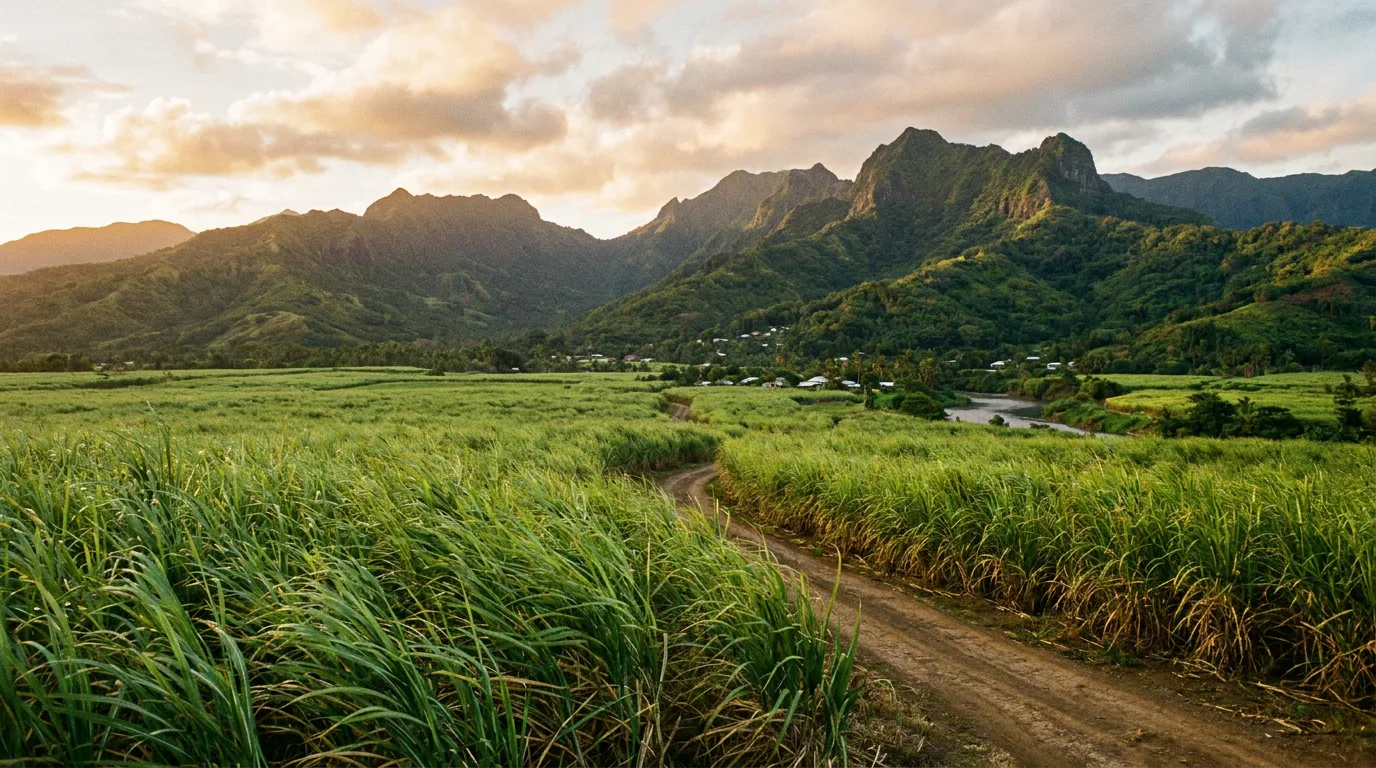
Fiji grows sugarcane on a scale most rum-producing islands would recognise. The cane is grown on thousands of smallholder farms, largely across the drier western side of Viti Levu and the north of Vanua Levu. It is crushed at Fijian mills into a dark, heavy molasses. Unlike much of the Caribbean, Fiji has not had to import that raw material. It is grown and milled here.
The Distillery Co Fiji already ferments and distils that Fijian molasses at Pacific Harbour and bottles it there for KaloKalo White Rum. In other words, the conditions for a genuinely single origin rum already exist in Fiji: local cane, local molasses, local fermentation and distillation, local bottling, and a Pacific climate unlike anywhere in the Caribbean. The research on cane and flavour is still young. Studies of Brazilian cachaça have found that cane variety, farming practice and region measurably change a spirit’s aroma, but no one has yet studied the same question for molasses rum. Nobody has measured what Fijian cane carries into its molasses, or what Fijian molasses becomes when fermentation and distillation are pushed for character rather than restraint and the result is bottled at full strength.
May’s article asked whether it was time for a Fiji white rum that tastes unmistakably of where it comes from. It is time to put that question to the test.
What that looks like at Pacific Harbour is a story for a future Field Note. But the question is no longer just a question.